When a DeLonghi coffee machine stops working, the cause is almost always one of five faults: a dirty or stuck brew unit, scale in the thermoblock, a jammed grinder, a blocked milk system, or a leak from a worn seal or valve. You clear the brew unit, scale and milk faults yourself. A damaged grinder and internal leaks need parts.
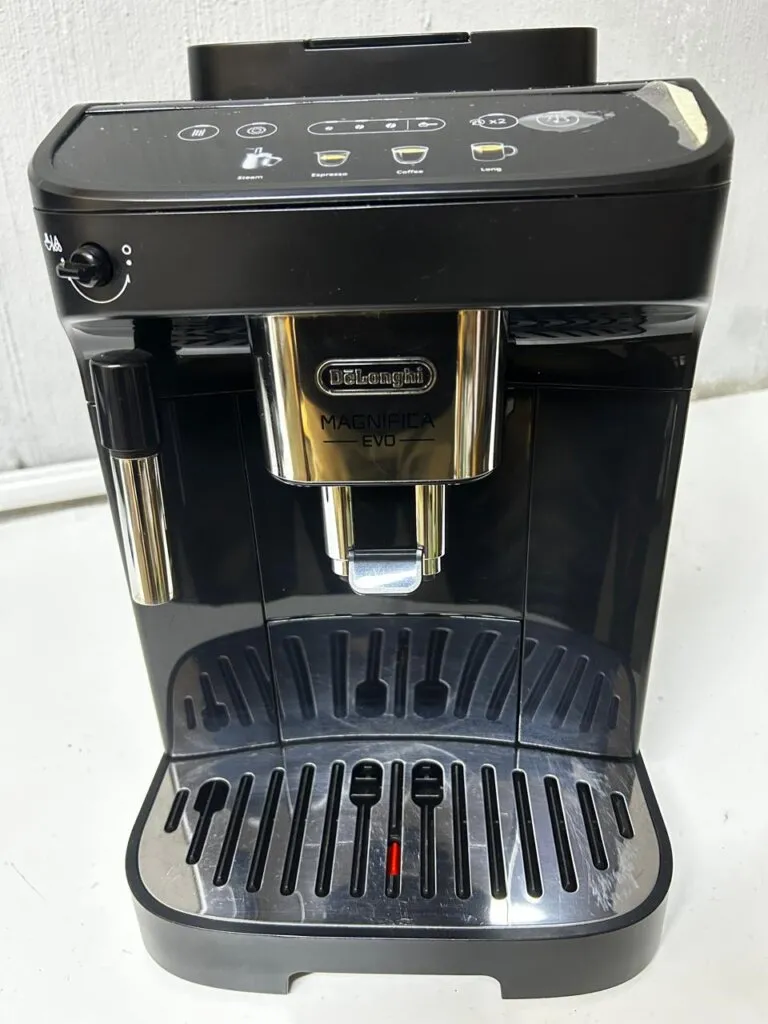
This guide covers the bean-to-cup models we repair most in our Randburg workshop: the Magnifica S, Magnifica Evo, Dinamica, Eletta, Rivelia and PrimaDonna. Most of it also applies to DeLonghi manual espresso machines like the Dedica.
What should you check first on a DeLonghi?
Most DeLonghi stoppages come from a tank, container or door not seated properly. Run through these checks first.
- Main switch. Most Magnifica and Dinamica models have a power switch at the back or side, separate from the button on the front. Make sure it’s on.
- Water tank. Lift the tank out and push it back down firmly. A tank sitting a few millimetres high gives the “fill water tank” message even when full.
- Grounds container. Empty it with the machine switched on. The message comes from a counter. DeLonghi asks you to empty the container after a set number of coffees or every 72 hours, and the counter only resets when you remove the container while the machine has power.
- Brew unit and door. Check the brew unit sits fully in place and the side door is closed.
- The message on the display. Our DeLonghi error codes and messages page explains every alert, from “General alarm” to the flashing descale light.
| What your DeLonghi does | Most likely fault | Fix at home? |
|---|---|---|
| Grinds, then no coffee comes out | Dirty or stuck brew unit | Usually |
| Slow, cool coffee and a descale alert | Scale in the thermoblock | Yes |
| Loud grinding noise or no grinding | Stone or oil in the grinder | Sometimes |
| Milk sputters or won’t froth | Dried milk in the frother | Usually |
| Water under the machine | Worn O-ring, tank valve or internal valve | Rarely |
| No lights at all | Board or thermal fuse | No |
1. The brew unit is dirty or stuck
A dirty brew unit is the most common reason a DeLonghi grinds the beans and then delivers no coffee. The brew unit presses the ground coffee and pushes hot water through it. Old grounds and coffee oil build up on its pistons and filter, the unit stiffens, and the machine either stops or shows a brew unit message.
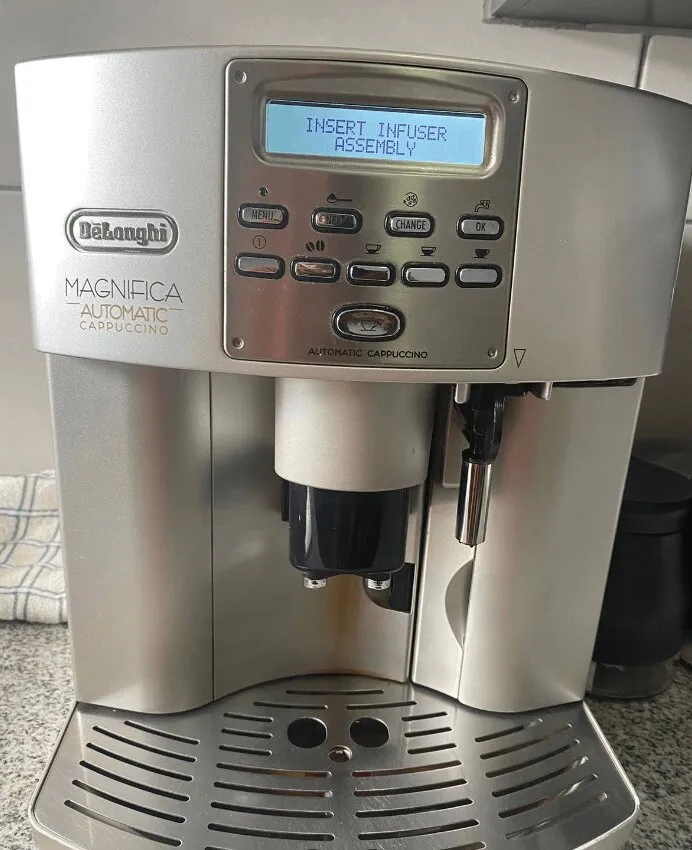
DeLonghi asks for a clean at least once a month. On a machine making coffee every day, we suggest once a week.
- Switch the machine off with the power button and wait for the shutdown cycle to finish. Then unplug it.
- Open the service door, squeeze the two red buttons on the brew unit, and pull it out gently.
- Soak the unit in lukewarm water for about five minutes, then rinse it under the tap and brush off the old coffee.
- Use water only. DeLonghi warns detergent damages the unit, and the brew unit doesn’t go in the dishwasher.
- Slide it back in until it clicks and close the door.
If the brew unit refuses to come out, don’t force it. The unit stopped in the wrong position. Switch the machine on, let the full start-up finish, switch it off with the power button again and wait for the shutdown. The unit then slides out.
A brew unit with worn seals or a cracked part needs a workshop service. A brew unit service or rebuild costs R2,200 to R4,500 on bean-to-cup machines, depending on the part prices for your model.
2. Scale has built up in the thermoblock
Scale makes a DeLonghi brew slowly, run cooler, and eventually stop. The thermoblock heats water as it passes through a narrow channel, and minerals from tap water settle in the channel every day. Ignore the descale alert long enough and the channel closes.
Use DeLonghi EcoDecalk, the only descaler DeLonghi recommends for its machines, and take out the water filter first if your tank has one. Don’t use vinegar. Vinegar hardens the rubber seals inside, and those seals cause the leaks in section 5.
Set your water hardness too. The box came with a test strip. Dip the strip in your tap water, then enter the result in the water hardness menu. The descale alert then comes at the right time for your area. Our guide to hard water and coffee machines explains the damage scale does inside.
If a descale cycle changes nothing, the scale has set hard. A workshop deep descale costs R650 to R1,100.
3. The grinder is noisy or won’t grind
A loud crack followed by a grinding noise means something hard went into the grinder. Beans sometimes contain small stones from the drying floor. A grinder turning without grinding usually means oily beans have clogged the chute.
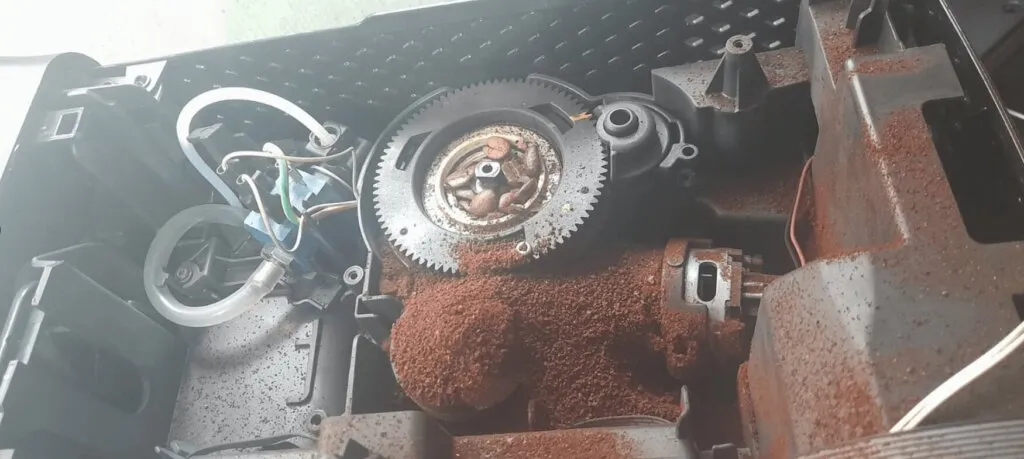
Switch off and unplug the machine. Empty the bean hopper and vacuum it out. Shine a torch into the grinder and remove anything you see. If you drink dark, shiny beans, switch to a medium roast. Dark roast oil glues the grounds to the chute.
Only change the grind setting while the grinder is running, and only one notch at a time. DeLonghi gives the same instruction, because turning the dial with the grinder stopped strains the mechanism. The change takes a few cups to show in the taste. Our DeLonghi grinder cleaning guide takes you through the full clean step by step.
Burrs wear out after years of daily use. When the coffee tastes weak and the grounds look uneven at every setting, the burrs need replacing in the workshop.
4. The milk won’t froth
Milk sputtering, coming out thin or stopping altogether means dried milk is blocking the frother. On LatteCrema machines, a few drops of milk left in the tubes harden overnight.
Turn the milk carafe dial to CLEAN, or press the clean button, after every milk drink so hot water flushes the tubes. DeLonghi calls this step essential. At least once a week, wash the carafe lid in hot soapy water or the dishwasher, and check the small O-rings on the connector for old milk. Once a month, run DeLonghi’s milk cleaning solution through. On machines with a steam wand, wipe the wand and blow steam through it straight after frothing.
When cleaning doesn’t bring the froth back, a seal or valve in the milk circuit has failed. A milk system repair costs R800 to R1,800.
5. The machine is leaking water
Empty the drip tray first and watch for a day. Water still appearing under the machine comes from inside: the brew unit O-rings, the tank valve or an internal valve. Unplug the machine, because water travels down to the control board. Our guide to finding where a coffee machine leaks shows how to trace it, including the leak points on DeLonghi bean-to-cup models. A leak repair costs R700 to R1,600.
Which faults show up on which DeLonghi model?
The five faults above hit every DeLonghi, but each range has its own habits.

- Magnifica S and Magnifica Evo. Brew unit and grounds container messages are the most common calls. Weak coffee or coffee from only one side of the spout means the spout is blocked with old coffee. Pull the spout off and rinse it.
- Dinamica. A “ground too fine” message means the coffee is flowing too slowly. Turn the grinder one notch coarser while it grinds, and make two or three coffees before changing it again.
- Rivelia and Eletta Explore. These show the empty grounds message on the same counter as the Magnifica, even with a half-full container. The fix is the same: empty it with the machine on.
- Dedica and other pump espresso machines. No coffee usually means coffee ground too fine or packed too hard into the basket. A Dedica switching itself off a few seconds after you press power usually had a button or knob left on, and goes into standby as a safety step. Switch everything off, then power on again.
Why won’t my DeLonghi turn on at all?
Check the main switch at the back, then try a different wall socket. If there are still no lights, a fuse or the control board has failed. This happens most often right after load shedding, when a surge on the returning power damages the board. Leave the machine unplugged and book an assessment. Our guide to load shedding damage shows how to protect the machine next time.
Why does my DeLonghi keep turning off?
A DeLonghi switching off after a set time is the auto-off setting doing its job. Find auto-off in the settings menu and choose a longer time. A machine cutting out in the middle of a coffee has a different problem, usually scale making the heater overheat or a fault on the board. Descale first. If it still cuts out, book an assessment.
Why is my DeLonghi coffee cold or no water coming out?
Cold coffee after a descale points to the thermoblock or its temperature sensor. A pump buzzing loudly with no water usually means an air lock or a worn pump. Refill the tank, seat it firmly and run hot water or a rinse cycle twice. If water still doesn’t flow, stop running the pump, because a dry pump overheats. A pump replacement costs R1,100 to R2,200, and a thermoblock R1,300 to R2,500. Our guide to why coffee makers stop working explains both faults on every brand.
How do I reset a DeLonghi coffee machine?
Switch off with the power button and wait for the shutdown cycle, then turn off the main switch or unplug for a few minutes. Switch on again and let the start-up rinse finish. A reset clears a stuck message or a brew unit out of position. A message returning after every reset points to a real fault, and our list of DeLonghi alarm messages tells you what each one means.
What does a DeLonghi repair cost?
Most DeLonghi repairs cost between R700 and R2,500. A brew unit rebuild is the main exception at R2,200 to R4,500. Our DeLonghi repair cost guide breaks the price down by fault, and our article on the DeLonghi parts most likely to wear out shows which ones to expect at which age.
We charge R499 to assess the machine. You get a firm quote before any work starts, and the R499 comes off the repair when you go ahead. We fit genuine DeLonghi parts, and every repair carries a 3-month warranty. See our DeLonghi coffee machine repairs page for the models we cover.
Two DeLonghi faults have their own guides. Magnifica and Magnifica S owners with water inside the casing should read about Magnifica mechanical valve faults, and our DeLonghi seal and gasket guide shows which seals wear first.

How do you keep a DeLonghi running?
Rinse the brew unit every week, flush the milk system after every milk drink, descale when the alert comes on, and book a full service once a year for a machine used every day. Our DeLonghi maintenance schedule lists every daily, weekly and monthly task.
DeLonghi questions we answer every week
Why does my DeLonghi keep saying “fill water tank” when the tank is full?
The tank isn’t seated deep enough to open the valve at its base, or scale has jammed the float. Remove the tank, rinse the valve, and push the tank down firmly. If the message stays, the water level sensor or the tank valve needs replacing.
Why does my DeLonghi say “empty grounds container” after I emptied it?
You emptied the container with the machine switched off, so the counter didn’t reset. The message runs on a counter of coffees made and hours passed. Switch the machine on, pull the container out, wait a few seconds, and put it back.
How often should I descale a DeLonghi?
Descale when the alert comes on, after you set the water hardness from the test strip. The harder your water and the more coffee you make, the sooner the alert comes. Never ignore it for weeks, because scale sets harder with every cycle.
Is an old DeLonghi worth repairing?
For most models, yes. A repair usually costs a fraction of a new Magnifica or Dinamica. If the machine needs several major parts at once, we’ll tell you, and our workshop-tested second-hand machines are another option.
DeLonghi still not working? Book a repair, call 010 065 1995, or WhatsApp a photo of the display message to 073 375 6375.